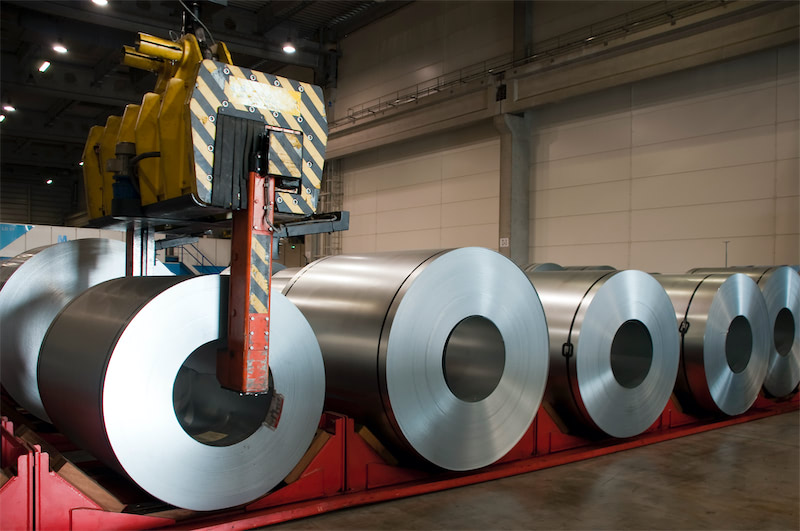
At 16:30 on July 3, 2025 (17:30 Korean time), the Chairman of Tsingshan Group and the President of POSCO officially signed the equity transfer agreement for Zhangjiagang POSCO Stainless Steel Co., Ltd. (ZPSS) and Tsingshan POSCO Stainless Steel Co., Ltd. (TPSS) in Seoul. According to the arrangement, the first batch of management teams from Tsingshan will be stationed at Zhangjiagang POSCO Stainless Steel Co., Ltd. on July 9 to carry out the handover work in an orderly manner.
This equity transfer, which was first publicly confirmed to explore the sale of equity in November 2024, has officially been completed after several months. ZPSS was established in 1995 as a joint venture between POSCO, a Korean steel giant, and Shagang Group, a Chinese steel company based in Jiangsu. In recent years, the company has suffered continuous losses, with reported losses of $130 million in 2024, making it the largest loss-making entity among POSCO's 38 overseas subsidiaries.
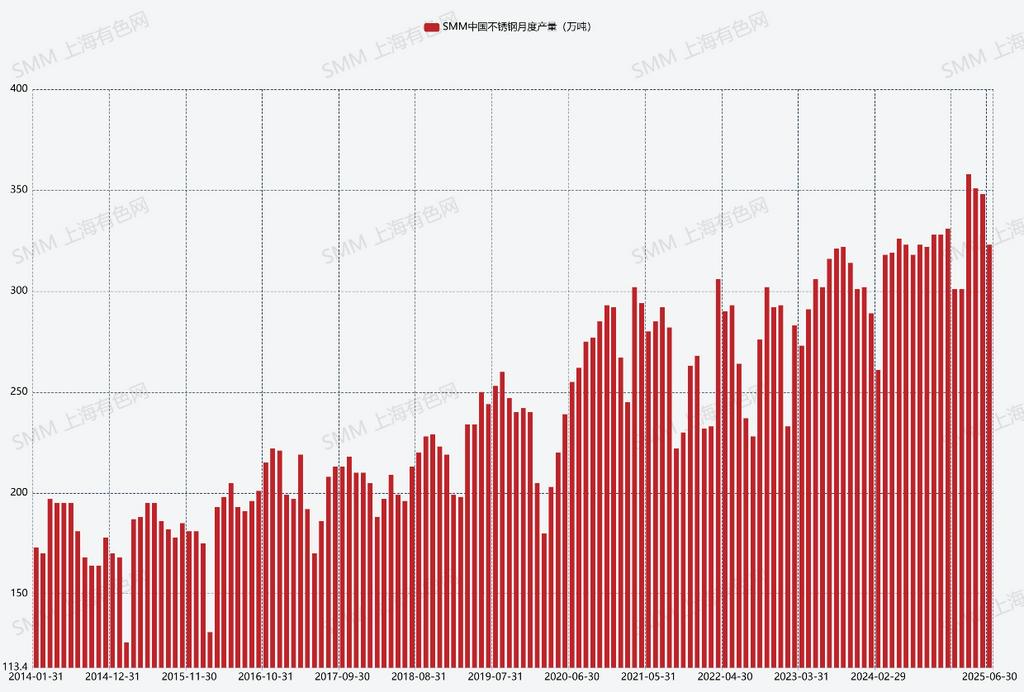
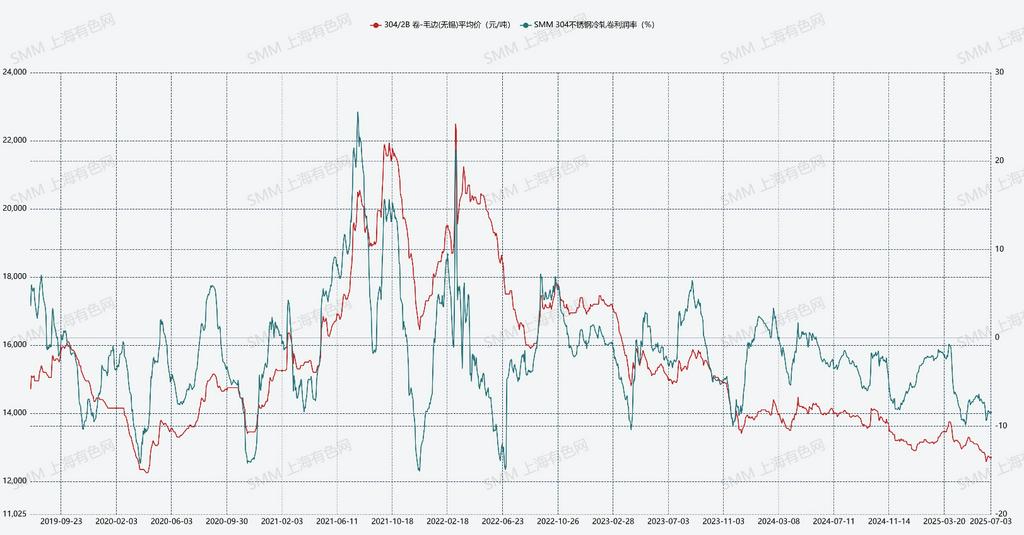
The stainless steel industry in China has expanded rapidly in recent years. By 2024, the national production had reached 37.85 million mt, showing a 26.79% increase compared to five years ago and a 55.14% increase compared to eight years ago. However, as the industry scale expanded, competition among enterprises continued to intensify. Coupled with the shrinking demand in major consumption sectors such as real estate in 2025, stainless steel prices recently pulled back to the levels seen at the beginning of the COVID-19 pandemic in 2020. This has significantly compressed production profit margins for enterprises, with most facing the dilemma of cost-price inversion.
On July 1, 2025, the Sixth Meeting of the Central Commission for Financial and Economic Affairs clearly proposed to regulate enterprises' low-price and disorderly competition in accordance with laws and regulations, guide enterprises to improve product quality, and promote the orderly exit of backward production capacity. "Anti-cut-throat competition" is not simply about reducing production capacity but about breaking the inertia of inefficient competition and reshaping a value chain anchored in technology, green development, and collaboration. Leveraging its cost advantages, Tsingshan is transforming loss-making production capacity. The transfer of ZPSS's equity may become a period for industry adjustment. As policies, capital, and the market jointly drive the optimization of the industrial landscape, China's stainless steel industry will gradually shift from quantity-based competition to a new track centered on quality and efficiency.
![Before the holiday, the black chain is unlikely to see a trend-driven market [SMM Steel Industry Chain Weekly Report].](https://imgqn.smm.cn/usercenter/zUFfM20251217171748.jpg)
![[SMM Chromium Daily Review] Inquiries and Transactions Weakened, Chromium Market Showed Mediocre Performance Before the Holiday](https://imgqn.smm.cn/usercenter/ENDOs20251217171718.jpg)